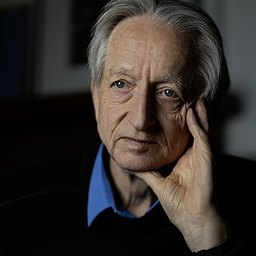
Geoffrey HintonGeoffrey Hinton
University of Toronto
Godfather of Deep Learning · Turing Award 2018 · Nobel Prize 2024Godfather of Deep Learning · Turing Award 2018 · Nobel Prize 2024
deep-learningmultimodal
Born 1947 in London. Studied at Clifton College, then earned a BA in Experimental Psychology at King's College Cambridge (1970). After a year apprenticing as a carpenter, pursued a PhD in AI at the University of Edinburgh (1978) under Christopher Longuet-Higgins. Postdoc at Sussex, then joined Carnegie Mellon in the 1980s as part of the PDP (Parallel Distributed Processing) group. Moved to the University of Toronto in 1987 where he has remained ever since. Published the landmark backpropagation paper (1986, Nature) with Rumelhart & Williams. Introduced Boltzmann machines (1985), deep belief nets (2006), and co-authored AlexNet (2012) with Krizhevsky and Sutskever, which won ImageNet by a historic margin and ignited the deep learning revolution. Co-founded the Vector Institute (2017). Joined Google Brain in 2013, resigned in May 2023 to speak freely about AI risks. Shared the Turing Award (2018) with LeCun and Bengio. Awarded the Nobel Prize in Physics (2024) alongside John Hopfield. Since then devoted to public AI-risk advocacy: in 2025-26 interviews (Jon Stewart, Neil deGrasse Tyson, MIT) he argued superintelligence is close to inevitable while safety measures lag far behind.
Born 1947 in London. Studied at Clifton College, then earned a BA in Experimental Psychology at King's College Cambridge (1970). After a year apprenticing as a carpenter, pursued a PhD in AI at the University of Edinburgh (1978) under Christopher Longuet-Higgins. Postdoc at Sussex, then joined Carnegie Mellon in the 1980s as part of the PDP (Parallel Distributed Processing) group. Moved to the University of Toronto in 1987 where he has remained ever since. Published the landmark backpropagation paper (1986, Nature) with Rumelhart & Williams. Introduced Boltzmann machines (1985), deep belief nets (2006), and co-authored AlexNet (2012) with Krizhevsky and Sutskever, which won ImageNet by a historic margin and ignited the deep learning revolution. Co-founded the Vector Institute (2017). Joined Google Brain in 2013, resigned in May 2023 to speak freely about AI risks. Shared the Turing Award (2018) with LeCun and Bengio. Awarded the Nobel Prize in Physics (2024) alongside John Hopfield. Since then devoted to public AI-risk advocacy: in 2025-26 interviews (Jon Stewart, Neil deGrasse Tyson, MIT) he argued superintelligence is close to inevitable while safety measures lag far behind.
在关系图谱中查看 Geoffrey Hinton →View Geoffrey Hinton in the graph →
听 Geoffrey Hinton 的 AI 播客 →Listen on AI Podcast →
读 Geoffrey Hinton 的论文与长文 →Read on AI Paper →